Autonomous AI Agents: US Remote Workers' Automation Guide by Q3 2026
Advertisements

The 40% surge in autonomous AI agents is poised to revolutionize remote work for US professionals by Q3 2026, necessitating a strategic shift towards automating routine tasks to enhance productivity and maintain competitiveness.
The landscape of remote work in the United States is on the brink of a profound transformation. With a projected 40% surge in autonomous AI agents by Q3 2026, US remote workers are faced with an urgent imperative: adapt or risk obsolescence. This isn't just about adopting new tools; it's about fundamentally rethinking how work is done, identifying tasks ripe for automation, and leveraging AI to elevate human potential rather than replace it. Are you prepared for this pivotal shift?
Understanding the Autonomous AI Agent Revolution
Autonomous AI agents are not merely advanced software; they are sophisticated systems capable of performing tasks, making decisions, and even learning without constant human oversight. Their projected 40% surge signifies a monumental shift, moving beyond simple automation scripts to intelligent entities that can manage complex workflows, analyze data, and interact with other systems independently. For US remote workers, this means a significant portion of their current responsibilities could soon be handled by these digital colleagues.
This revolution is driven by advancements in machine learning, natural language processing, and robotic process automation (RPA). These agents can interpret instructions, execute multi-step processes, and even self-correct, offering unprecedented levels of efficiency and accuracy. Their impact will be felt across every industry, from finance and healthcare to marketing and customer service, fundamentally altering job descriptions and skill requirements.
What Defines an Autonomous AI Agent?
- Goal-Oriented: Designed to achieve specific objectives without continuous human input.
- Adaptive Learning: Capable of learning from data and improving performance over time.
- Environmental Interaction: Can perceive and act within their digital environment.
- Decision-Making: Possess the ability to make choices based on programmed rules and learned patterns.
The rise of these agents challenges the traditional remote work model, where human workers are often bogged down by repetitive, time-consuming tasks. By offloading these duties to AI, remote workers can redirect their energy towards more strategic, creative, and interpersonal aspects of their roles. Understanding the capabilities and limitations of these agents is the first step towards successfully integrating them into your workflow.
In essence, autonomous AI agents are becoming increasingly sophisticated, moving from simple rule-based automation to more intelligent, adaptive systems. This evolution demands that remote professionals not only recognize their potential but also actively seek ways to collaborate with them, transforming their roles from task executors to AI orchestrators and strategists.
Identifying Repetitive Tasks Ripe for Automation
To effectively leverage the 40% surge in autonomous AI agents, US remote workers must first become adept at identifying which of their daily tasks are best suited for automation. The goal is not to automate for the sake of it, but to strategically offload work that is repetitive, rule-based, data-heavy, or prone to human error. This frees up valuable time for activities that require critical thinking, emotional intelligence, and complex problem-solving – areas where human expertise remains paramount.
Think about the tasks that consume a significant portion of your week but don't necessarily require your unique human insight. These are the prime candidates for an AI agent takeover. Often, these tasks are crucial for business operations but offer little personal growth or creative fulfillment. Identifying them systematically is key to a smooth transition.
Common Automation Candidates in Remote Work
- Data Entry and Management: Transferring information between systems, updating databases, and generating reports.
- Scheduling and Calendar Management: Coordinating meetings, sending invites, and managing availability.
- Email Triage and Response: Filtering emails, drafting standard replies, and flagging urgent communications.
- Customer Support Inquiries: Handling frequently asked questions and routing complex issues to human agents.
- Social Media Scheduling and Monitoring: Posting content, tracking engagement, and basic community management.
Beyond these common examples, consider any task that involves following a defined sequence of steps, processing large volumes of structured data, or performing routine checks. These are the low-hanging fruit for automation. Tools ranging from RPA platforms to specialized AI assistants can be configured to execute these tasks with speed and accuracy, often exceeding human capabilities.
The process of identifying tasks for automation should involve a critical review of your workflow. Document your daily and weekly activities, noting the time spent on each. Any task that appears frequently on your list and fits the criteria of being repetitive or rule-based is a strong contender. Engaging with colleagues to share insights on what they find most tedious can also uncover automation opportunities across your team.
Strategic Implementation of AI in Remote Workflows
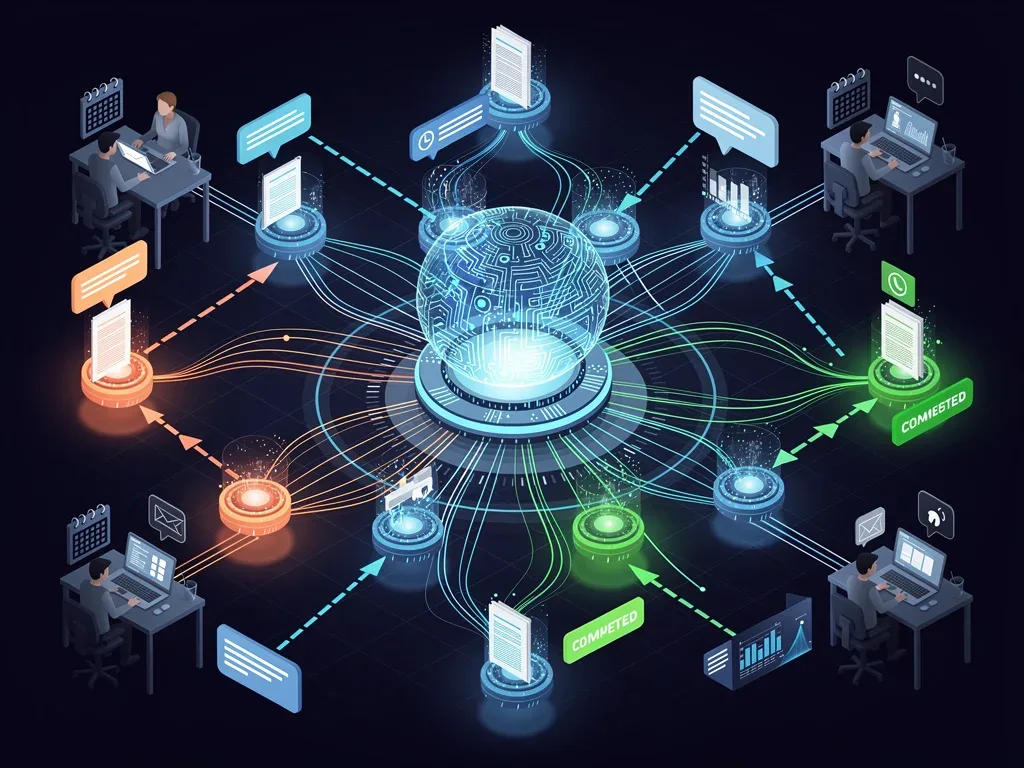
Once potential tasks for automation are identified, the next critical step for US remote workers is the strategic implementation of autonomous AI agents into their existing workflows. This isn't a one-size-fits-all approach; it requires careful planning, integration, and ongoing optimization to ensure that AI truly augments human capabilities and enhances productivity rather than creating new complexities. A phased approach, starting with simpler automations and gradually moving to more complex ones, is often the most effective.
The success of AI integration hinges on understanding the specific needs of your role and team. Instead of looking for a single AI solution to solve all problems, consider a modular approach where different AI agents or tools handle distinct sets of tasks. This allows for greater flexibility and easier troubleshooting.
Key Steps for Effective AI Integration
- Pilot Programs: Start with small-scale implementations to test AI agents on specific, low-risk tasks.
- Training and Upskilling: Invest in learning how to configure, monitor, and troubleshoot AI tools.
- Data Security and Privacy: Ensure that all AI integrations comply with data protection regulations and company policies.
- Performance Monitoring: Regularly assess the efficiency and accuracy of automated tasks.
- Feedback Loops: Establish mechanisms for remote workers to provide feedback on AI agent performance and suggest improvements.
The implementation phase should also involve clear communication within your team. Explain the benefits of AI automation, address concerns about job displacement, and emphasize how these tools will empower workers to focus on higher-value activities. Transparency and education are vital for fostering adoption and minimizing resistance.
Furthermore, consider the interoperability of AI tools with your existing software ecosystem. Seamless integration with communication platforms, project management tools, and CRM systems will maximize the impact of autonomous agents. The goal is to create a cohesive digital environment where human and AI efforts are synchronized, leading to a more efficient and productive remote workforce.
Upskilling for the AI-Augmented Future
The rapid 40% surge in autonomous AI agents means that traditional skill sets for US remote workers will need significant augmentation. The focus is shifting from performing routine tasks to managing, optimizing, and collaborating with AI. This necessitates a proactive approach to upskilling and reskilling, ensuring that the human workforce remains indispensable and thrives in an AI-augmented future. The demand for roles that bridge the gap between human creativity and AI efficiency will only grow.
This isn't about becoming an AI developer, but rather about developing a new kind of literacy – AI literacy. It involves understanding how AI works at a conceptual level, recognizing its potential applications, and knowing how to interact with AI systems effectively. Remote workers who embrace this learning curve will be at a significant advantage.
Essential Skills for Collaborating with AI Agents
- Prompt Engineering: Crafting clear and effective instructions for AI models to achieve desired outcomes.
- Data Interpretation: Analyzing outputs from AI agents to derive meaningful insights and make informed decisions.
- Critical Thinking: Evaluating AI-generated content or decisions for accuracy, bias, and relevance.
- Problem-Solving: Identifying complex issues that AI cannot yet handle and developing human-centric solutions.
- Ethical AI Use: Understanding and applying ethical guidelines for AI deployment and data handling.
Online courses, certifications, and workshops are becoming increasingly available to help professionals acquire these new skills. Many companies are also investing in internal training programs to prepare their remote teams for this technological shift. Proactive learning, even if it's just dedicating a few hours a week to understanding AI concepts, can make a substantial difference.
Moreover, soft skills like adaptability, creativity, and emotional intelligence will become even more valuable. As AI handles the predictable, humans will be called upon to excel in areas that require nuanced understanding, interpersonal communication, and innovative thinking. Cultivating these uniquely human attributes alongside AI literacy will define success in the evolving remote work landscape.
Overcoming Challenges and Ethical Considerations
While the 40% surge in autonomous AI agents promises unprecedented efficiency for US remote workers, it also brings a unique set of challenges and ethical considerations that must be addressed proactively. Navigating these complexities is crucial for ensuring that AI integration is not only productive but also responsible and equitable. Ignoring these aspects could lead to unforeseen problems, including data breaches, biased outcomes, and job displacement concerns.
One of the primary concerns revolves around data privacy and security. Autonomous agents often require access to sensitive information to perform their tasks. Ensuring robust cybersecurity measures and compliance with regulations like GDPR and CCPA is paramount. Companies and individual remote workers must be vigilant about how data is collected, stored, and processed by AI systems.
Key Challenges and Ethical Dilemmas
- Data Security: Protecting sensitive information processed by AI agents from breaches.
- Algorithmic Bias: Ensuring AI models do not perpetuate or amplify existing human biases.
- Job Displacement: Managing the impact of automation on employment and reskilling the workforce.
- Accountability: Defining who is responsible when an autonomous AI agent makes an error or causes harm.
- Transparency: Understanding how AI agents make decisions and providing clear explanations.

Another significant challenge is the potential for algorithmic bias. If AI models are trained on biased data, they can produce discriminatory or unfair outcomes. Remote workers involved in deploying or overseeing AI must be trained to identify and mitigate these biases, ensuring that AI systems operate fairly and justly. Regular audits and diverse training datasets are essential for addressing this.
Furthermore, the ethical implications of job displacement cannot be overlooked. While AI automates tasks, it will inevitably change job roles. Companies have a responsibility to invest in reskilling programs and foster a culture of continuous learning to support their workforce through this transition. Remote workers, in turn, must embrace lifelong learning to stay relevant.
Finally, establishing clear lines of accountability for AI decisions is vital. When an autonomous agent makes a mistake, determining who is responsible – the developer, the user, or the system itself – is a complex legal and ethical question that needs careful consideration as AI becomes more integrated into critical operations.
The Future Landscape of US Remote Work with AI
By Q3 2026, the 40% surge in autonomous AI agents will have irrevocably reshaped the landscape of US remote work. This future will be characterized by a symbiotic relationship between humans and AI, where technology handles the mundane and repetitive, allowing human creativity, critical thinking, and interpersonal skills to flourish. Remote work will become more strategic, efficient, and potentially more fulfilling, but only for those who embrace this transformation.
The office, whether physical or virtual, will evolve into a hub for collaboration, innovation, and strategic oversight. Remote workers will spend less time on administrative burdens and more time on complex problem-solving, client relationships, and developing new ideas. This shift demands a proactive mindset and a willingness to continuously adapt to new technological paradigms.
Emerging Trends in AI-Driven Remote Work
- Hyper-Personalized Workflows: AI agents will tailor tasks and information flow to individual worker preferences and needs.
- Predictive Analytics for Productivity: AI will analyze work patterns to proactively identify bottlenecks and suggest improvements.
- Enhanced Collaboration Tools: AI-powered assistants will facilitate better communication and coordination across distributed teams.
- Automated Compliance and Governance: AI will ensure adherence to regulations, reducing human error in compliance tasks.
- New AI-Centric Roles: Emergence of roles like AI Ethicists, AI Trainers, and AI Integration Specialists within remote teams.
The concept of "work-life balance" may also see a redefinition. By automating tedious tasks, remote workers could experience reduced burnout and have more time for personal pursuits, leading to greater job satisfaction and overall well-being. However, this also requires discipline to set boundaries and prevent AI from leading to an 'always-on' work culture.
Ultimately, the future of US remote work is not about AI replacing humans, but about AI empowering humans to achieve more. Those who understand how to harness the power of autonomous AI agents will be the pioneers of this new era, driving innovation and setting new standards for productivity and efficiency in the digital age. The time to prepare is now, as Q3 2026 is rapidly approaching.
| Key Automation Area | Description for Remote Workers |
|---|---|
| Administrative Tasks | Automating scheduling, email triage, and data entry to free up strategic time. |
| Data Management | Using AI agents for efficient data collection, analysis, and report generation. |
| Customer Interactions | Deploying AI chatbots for first-line support and FAQ resolution. |
| Workflow Optimization | Leveraging AI to identify inefficiencies and streamline complex processes. |
Frequently Asked Questions about AI Automation
What exactly are autonomous AI agents?▼Autonomous AI agents are software systems capable of performing tasks, making decisions, and learning independently, without continuous human intervention. They are designed to achieve specific goals and can adapt their behavior based on new data and environmental interactions.
How will the 40% surge in AI agents impact remote jobs?▼The surge will automate many repetitive tasks, shifting human roles towards strategic planning, creative problem-solving, and AI management. While some tasks may be replaced, new opportunities in AI oversight, development, and ethical guidance will emerge for US remote workers.
What tasks should US remote workers prioritize for automation?▼Remote workers should prioritize automating repetitive, rule-based, data-heavy, or time-consuming tasks such as data entry, scheduling, email triage, and initial customer support inquiries. This frees up time for higher-value activities requiring human judgment.
What skills are essential for collaborating with AI agents?▼Key skills include prompt engineering, data interpretation, critical thinking, problem-solving, and understanding ethical AI use. Adaptability, creativity, and emotional intelligence will also become increasingly valuable as AI handles predictable tasks.
What are the main ethical concerns with autonomous AI?▼Primary concerns include data security, algorithmic bias, potential job displacement, and establishing clear accountability for AI decisions. Ensuring transparency and fairness in AI systems is crucial for responsible integration into remote work environments.
Conclusion
The impending 40% surge in autonomous AI agents by Q3 2026 is not merely a technological forecast; it's a call to action for US remote workers. This evolution mandates a strategic shift towards automation, empowering professionals to shed repetitive tasks and embrace roles that leverage their unique human capacities for creativity, critical thinking, and complex problem-solving. By proactively identifying automation opportunities, strategically implementing AI, and committing to continuous upskilling, remote workers can not only navigate this transformative period but also thrive within a more efficient, innovative, and human-centric work future. The time to prepare and adapt is now, ensuring that the benefits of AI are fully realized to enhance, not diminish, the remote work experience.
