Corecore to Slopcore: Decoding Absurdist Video Aesthetics for 2026
Advertisements
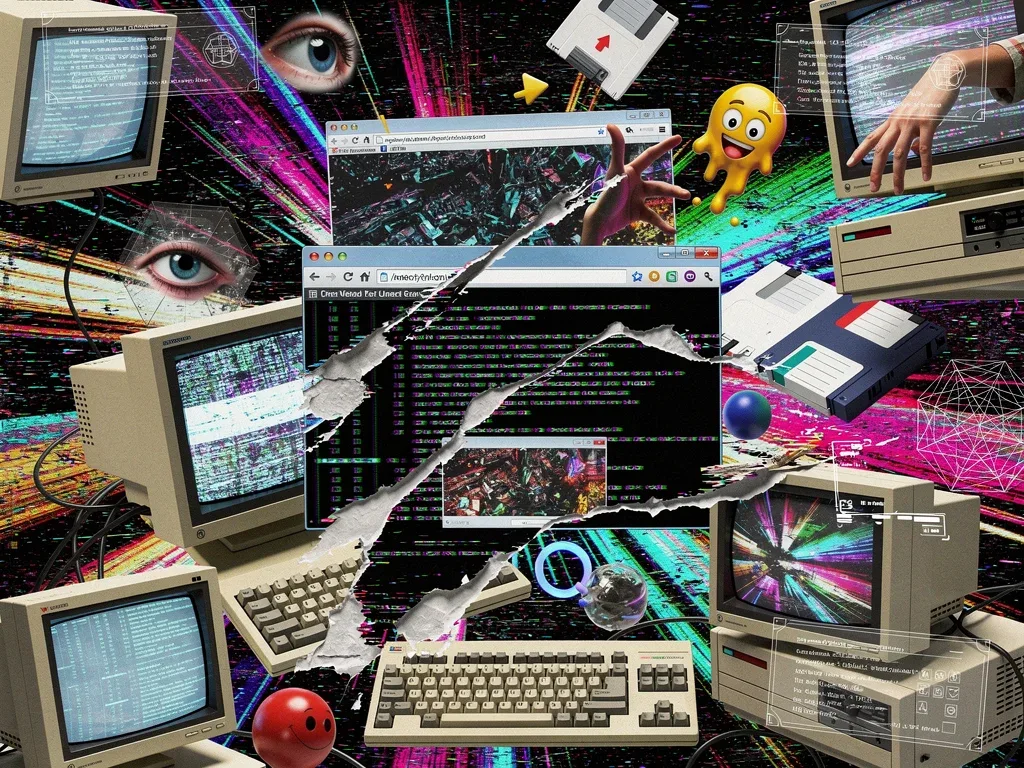
The digital landscape of 2026 is defined by evolving absurdist video aesthetics, ranging from the introspective chaos of Corecore to the deliberately unpolished nature of Slopcore, reflecting a complex interplay of internet culture and societal anxieties.
In an ever-evolving digital realm, new artistic expressions constantly emerge, capturing the zeitgeist of online communities. The journey from Corecore to Slopcore: Decoding the 4 Absurdist Video Aesthetics Dominating 2026 Feeds offers a fascinating glimpse into how creators are using unconventional methods to communicate, provoke, and entertain. These aesthetics, often chaotic and deliberately nonsensical, are more than just fleeting trends; they are reflections of our collective digital consciousness.
the origins of absurdist digital aesthetics
The internet, a melting pot of ideas and expressions, has always been fertile ground for the unconventional. Absurdist digital aesthetics didn't just appear overnight; they are a natural evolution of earlier internet phenomena that challenged traditional notions of art and storytelling. From early meme culture to Vine's rapid-fire comedy, the stage was set for content that embraced the bizarre and the fragmented.
These early forms of digital absurdity laid the groundwork for today's complex video aesthetics. Creators learned to leverage the unique characteristics of online platforms, such as short attention spans and the viral nature of content, to push boundaries. The democratizing effect of social media meant that anyone could become a creator, leading to an explosion of diverse and often experimental content.
from dada to digital: a historical perspective
The concept of absurdity in art is not new. Movements like Dadaism and Surrealism in the early 20th century championed the irrational, the illogical, and the dreamlike, directly challenging conventional artistic norms. Fast forward to the digital age, and we see a clear lineage.
- Dadaist Influence: The deliberate rejection of logic and reason, often seen in the juxtaposition of unrelated elements, mirrors the chaotic edits of modern absurdist videos.
- Surrealist Echoes: The dreamlike, often unsettling imagery and narrative non-sequiturs in some digital aesthetics recall surrealist art, inviting viewers to find meaning in the irrational.
- Postmodern Deconstruction: The breaking down of traditional narratives and the embrace of pastiche are central to many contemporary video styles, reflecting a postmodern understanding of culture.
Understanding these historical roots provides context for why these digital aesthetics resonate so deeply. They tap into a long-standing human fascination with the absurd as a means of questioning reality and expressing deeper truths.
The origins of absurdist digital aesthetics are deeply intertwined with the internet's capacity for rapid information dissemination and the inherent human desire to make sense of a chaotic world, often by mirroring that chaos in creative output. This foundational understanding is crucial for appreciating the nuances of Corecore, Slopcore, and their contemporaries.
corecore: the fragmented reality
Corecore emerged as a potent expression of digital disillusionment and existential angst, often characterized by its rapid-fire montage of seemingly unrelated clips, overlaid with melancholic or unsettling audio. It's a style that thrives on juxtaposition, creating a sense of fragmented reality that resonates deeply with a generation navigating information overload and societal anxieties.
The aesthetic isn't about telling a linear story but rather evoking a feeling or a mood through a barrage of disparate elements. Viewers are left to piece together their own interpretations, making the experience highly personal and often profound. It's a reflection of how many individuals process the world today – through snippets, headlines, and fleeting images.
visual and auditory hallmarks of corecore
Corecore videos are immediately recognizable by their distinct stylistic choices. The visual language is often raw, unfiltered, and intentionally jarring.
- Rapid Edits: Quick cuts between diverse footage, including news clips, stock footage, personal vlogs, and abstract visuals.
- Nostalgic and Found Footage: Frequent use of archival material, old commercials, or public domain videos, often distorted or degraded.
- Text Overlays: Short, impactful phrases or philosophical questions that add another layer of meaning or confusion.
- Ambient or Disquieting Soundscapes: Music and sound effects are crucial, often featuring melancholic electronic tracks, spoken word samples, or eerie atmospheric sounds that enhance the emotional impact.
These elements combine to create a sensory experience that is both overwhelming and thought-provoking. The beauty of Corecore lies in its ability to find coherence within chaos, reflecting the internal landscapes of its creators and viewers.
The themes explored in Corecore are often dark, touching upon existential dread, consumerism, political disillusionment, and the overwhelming nature of modern life. It's a digital catharsis, a way for creators to process and articulate their feelings about a world that often feels out of control.
slopcore: embracing the unpolished and spontaneous
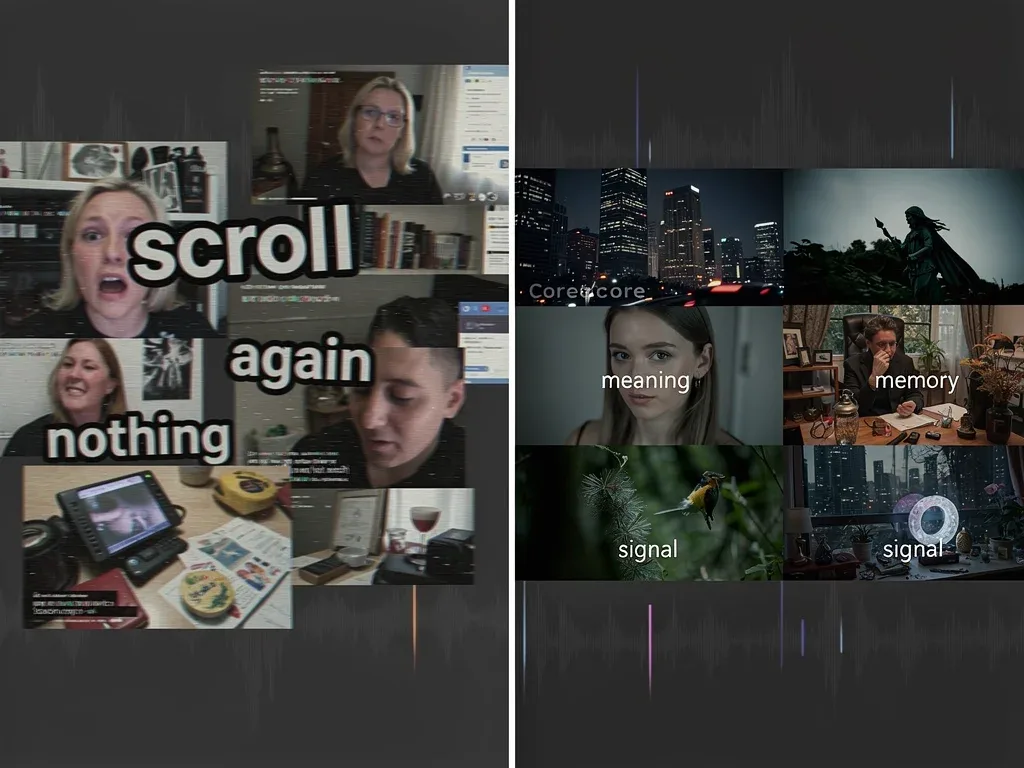
While Corecore grapples with profound anxieties through curated chaos, Slopcore takes a different approach by deliberately embracing the unpolished, the spontaneous, and the often nonsensical. It's an aesthetic that revels in imperfection, rejecting the highly produced and polished content that often dominates mainstream media. Slopcore videos are characterized by their raw, off-the-cuff feel, often resembling casual phone recordings or unedited streams of consciousness.
This style is a direct rebellion against the pressure to create "perfect" content. It values authenticity over aesthetics, finding beauty and humor in the mundane, the awkward, and the genuinely unplanned. Slopcore is the digital equivalent of a rough draft, shared openly and without apology.
key characteristics of slopcore videos
Slopcore’s visual and thematic elements stand in stark contrast to more refined digital aesthetics. Its defining features are often a result of deliberate anti-production choices.
- Low Fidelity and Poor Production Value: Intentionally blurry footage, bad lighting, shaky camera work, and often poor audio quality are hallmarks.
- Stream-of-Consciousness Narratives: Videos often lack a clear plot or purpose, instead following the creator's immediate thoughts or observations.
- Everyday Mundanity: Focus on ordinary activities, often presented without context or explanation, challenging viewers to find meaning in the trivial.
- Absurdist Humor: Humor is often derived from the awkwardness, the unexpected, or the sheer pointlessness of the content.
Slopcore thrives on its casual nature, creating a sense of intimacy and relatability. It feels less like a performance and more like a peek into someone's unedited life, albeit a very strange one. This aesthetic often fosters a strong sense of community among viewers who appreciate its raw honesty and rebellious spirit.
The rise of Slopcore can be seen as a pushback against the curated perfection of influencer culture. It celebrates the real, the messy, and the unpretentious, offering a refreshing alternative in a digital landscape often dominated by highly stylized presentations. It's about finding joy and connection in shared imperfection.
glitchcore: the beauty in digital breakdown
Glitchcore celebrates the imperfections and errors inherent in digital technology, transforming visual and auditory malfunctions into an intentional artistic statement. Unlike Corecore's fragmented reality or Slopcore's raw spontaneity, Glitchcore finds its aesthetic in the digital breakdown itself—the pixelation, distortion, and data corruption that typically signify a problem. For Glitchcore artists, these errors are not flaws but opportunities for new forms of expression.
This aesthetic taps into a fascination with the digital uncanny, where the familiar becomes alien through systematic disruption. It’s a visual and auditory language that speaks to the transient nature of digital information and the constant interaction between human intention and machine error.
visual and auditory elements of glitchcore
Glitchcore videos are immediately recognizable by their distinctive digital imperfections, which are often meticulously crafted to appear accidental.
- Visual Distortion: Pixelation, color shifts, screen tearing, digital artifacts, and corrupted imagery are central.
- Audio Aberrations: Deliberate use of static, digital noise, audio clipping, and distorted sound effects.
- Repetition and Looping: Short, glitchy loops that create a hypnotic or unsettling rhythm.
- Abstract Patterns: The errors themselves often form intricate, geometric, or abstract patterns that are visually striking.
The appeal of Glitchcore lies in its ability to transform what is typically perceived as undesirable into something beautiful and thought-provoking. It challenges viewers to reconsider their relationship with technology and to find aesthetic value in its failures.
Glitchcore often explores themes of digital decay, information overload, and the fragility of our technologically dependent world. It’s a commentary on how our lives are increasingly mediated by screens and code, and what happens when that mediation breaks down. This aesthetic is a powerful reminder of the artificiality that underpins much of our digital experience.
nostalgia bait: the weaponization of yearning
Nostalgia Bait is an absurdist aesthetic that capitalizes on a collective longing for past eras, particularly the late 20th and early 21st centuries, often presenting these memories through a distorted or exaggerated lens. It's not just about reminiscing; it's about curating and manipulating nostalgic imagery and sounds to evoke a powerful, sometimes unsettling, sense of yearning. This aesthetic often plays with the idea of a "simpler time," even if that simplicity is a manufactured construct.
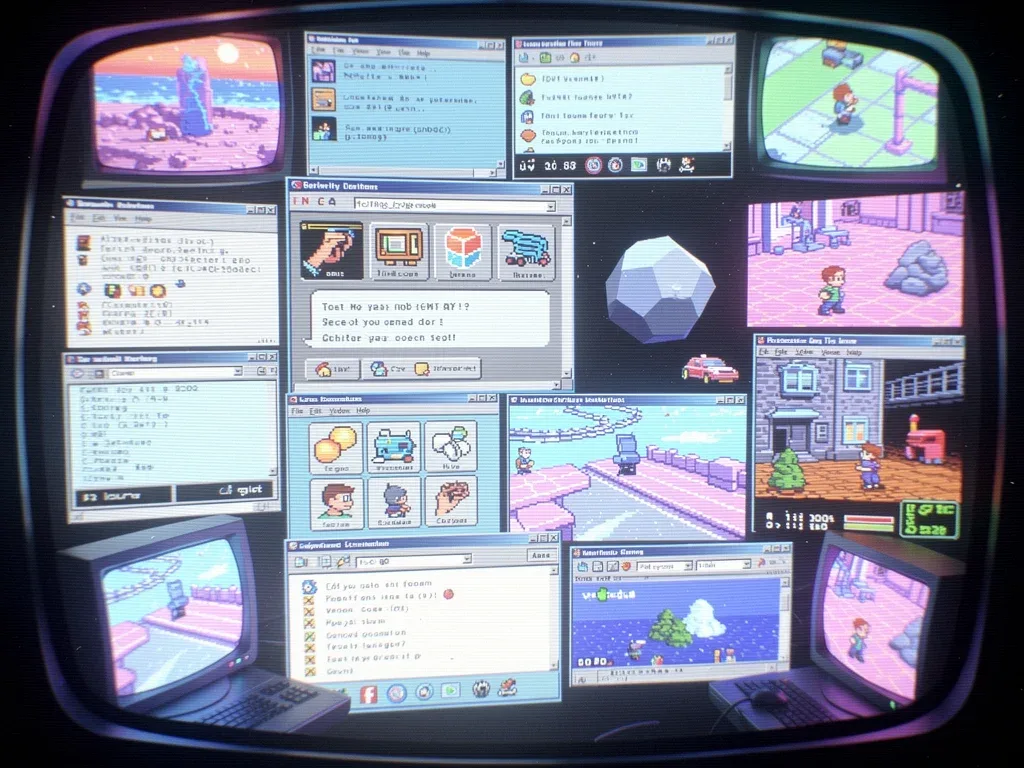
The videos frequently use visual and auditory cues from specific decades, like VHS tape effects, pixel art, dial-up modem sounds, or snippets of forgotten pop culture. The absurdity comes from the often-disconnected way these elements are presented, creating a dreamlike, almost melancholic, experience that can feel both comforting and disorienting.
elements that define nostalgia bait
Nostalgia Bait is a sophisticated aesthetic that employs specific techniques to trigger emotional responses related to the past. These elements are chosen for their strong evocative power.
- Retro Visual Filters: VHS tape distortions, CRT screen effects, low-resolution graphics, and old film grain are common.
- Period-Specific Soundscapes: Use of vintage music, old commercial jingles, classic video game sounds, or ambient noise from previous decades.
- Cultural Artifacts: Incorporation of recognizable objects, fashion, or media clips from a specific era, often presented out of context.
- Emotional Ambiguity: While evoking comfort, these videos often carry an underlying sense of loss, melancholia, or even unease, hinting at the impossibility of truly returning to the past.
This aesthetic taps into a universal human tendency to romanticize the past, especially in times of present uncertainty. By presenting idealized or fragmented versions of bygone eras, Nostalgia Bait offers a temporary escape while simultaneously highlighting the distance between then and now.
Nostalgia Bait is more than just a trip down memory lane; it's a commentary on how we perceive and consume history in the digital age. It questions the authenticity of memory and explores the collective longing for times that may have never existed exactly as we remember them.
the cultural impact and future of absurdist aesthetics
The proliferation of absurdist video aesthetics like Corecore, Slopcore, Glitchcore, and Nostalgia Bait signifies a significant cultural shift in how we create, consume, and interpret digital content. These styles are not just fleeting trends; they are powerful reflections of contemporary anxieties, desires, and the evolving nature of digital communication. Their impact extends beyond mere entertainment, influencing artistic expression, marketing strategies, and even psychological well-being.
These aesthetics provide a unique outlet for young creators to express complex emotions and societal critiques in ways that traditional media often cannot. They foster communities built around shared understanding of the absurd, creating spaces where vulnerability and unconventional thought are celebrated.
societal reflections and artistic freedom
The rise of absurdist aesthetics is deeply rooted in broader societal changes. In a world characterized by information overload, political polarization, and environmental concerns, these art forms offer a means of processing and reacting to overwhelming realities.
- Coping Mechanism: For many, creating or consuming absurdist content acts as a form of digital escapism or a way to externalize internal chaos.
- Counter-Culture Movement: These aesthetics often stand in opposition to mainstream, highly polished content, offering an alternative for those seeking authenticity and rawness.
- New Forms of Storytelling: They challenge conventional narrative structures, proving that meaning can be found in non-linearity and juxtaposition.
- Democratization of Art: The low barrier to entry for creating such content empowers individuals, particularly youth, to become artists and commentators.
The future of these aesthetics is likely to be dynamic, with constant evolution and mutation. As new technologies emerge and societal landscapes shift, so too will the ways in which absurdity manifests online. We might see further blending of these styles, the emergence of entirely new 'cores,' or even a pushback towards hyper-realism as a reaction to the current wave of digital surrealism.
Ultimately, these absurdist aesthetics serve as a crucial barometer for internet culture, reflecting collective consciousness and providing a platform for voices that might otherwise go unheard. Their continued evolution will undoubtedly shape the digital feeds of 2026 and beyond, keeping us perpetually engaged in decoding their complex messages.
navigating the digital landscape: decoding meaning
Understanding and appreciating absurdist video aesthetics requires a willingness to look beyond conventional interpretations and embrace ambiguity. In a digital landscape increasingly saturated with content, these styles offer a refreshing challenge to passive consumption, inviting viewers to actively participate in the construction of meaning. Decoding these aesthetics is not about finding a single, definitive answer, but rather about engaging with the fragmented narratives and emotional undertones they present.
For creators, mastering these styles means understanding the delicate balance between intentional chaos and accidental brilliance. For viewers, it means cultivating an open mind and recognizing that art, in its purest form, often thrives in the unconventional.
tips for interpreting absurdist video aesthetics
Approaching these unique forms of digital expression can be daunting at first, but a few strategies can help unlock their deeper layers.
- Embrace Ambiguity: Don't search for a clear plot or message. Instead, focus on the feelings, moods, and juxtapositions presented.
- Consider the Context: Think about the broader cultural and societal issues that might be influencing the creator. Absurdity often comments on reality.
- Pay Attention to Details: Small visual or auditory cues can often provide significant insights into the creator's intent or the underlying theme.
- Reflect on Personal Resonance: How does the content make you feel? What memories or thoughts does it evoke? Your personal interpretation is often key.
The act of decoding these aesthetics becomes a deeply personal journey, reflecting the viewer's own experiences and perspectives. It's a testament to the power of art to communicate on multiple levels, often bypassing traditional logic in favor of emotional and intuitive understanding.
As the digital landscape continues to evolve, so too will the ways in which we make sense of its creative output. Absurdist video aesthetics are not merely fleeting trends; they are an enduring testament to human creativity's ability to find expression in the most unexpected and chaotic forms, continually challenging us to rethink what art can be in the 21st century.
| Aesthetic | Brief Description |
|---|---|
| Corecore | Fragmented reality, rapid edits, melancholic tones, reflecting digital disillusionment. |
| Slopcore | Unpolished, spontaneous, low-fidelity content, embracing imperfection and raw authenticity. |
| Glitchcore | Celebrates digital errors and distortions, transforming malfunctions into intentional art. |
| Nostalgia Bait | Manipulates retro imagery and sounds to evoke distorted or exaggerated yearning for the past. |
frequently asked questions about absurdist video aesthetics
What is the main difference between Corecore and Slopcore?▼Corecore typically involves a more curated, albeit chaotic, montage of fragmented clips often conveying existential dread or social commentary. Slopcore, in contrast, embraces genuine unpolished spontaneity and low production value, often focusing on mundane or absurd everyday moments without a deep underlying message.
Why are these absurdist video aesthetics gaining popularity?▼Their popularity stems from several factors: a desire for authenticity in an overly curated digital world, a means to express complex anxieties, and a rebellion against traditional media. They offer unique ways to connect and process information in an increasingly chaotic online environment.
How does Glitchcore use digital errors artistically?▼Glitchcore intentionally incorporates visual and auditory malfunctions like pixelation, distortion, and static. These errors, usually considered flaws, are transformed into deliberate aesthetic choices, creating unique patterns and textures that challenge perceptions of digital perfection and explore technological fragility.
Is Nostalgia Bait just about reminiscing about the past?▼While it involves elements of reminiscence, Nostalgia Bait goes beyond simple nostalgia. It often distorts or exaggerates past imagery and sounds, creating a sense of yearning that can be both comforting and disorienting. It's a commentary on how we perceive and consume history digitally.
What societal issues do these aesthetics reflect?▼These aesthetics often mirror societal issues such as information overload, digital disillusionment, existential dread, and a longing for authenticity. They serve as a creative outlet for individuals to process and react to the complexities and anxieties of modern life in a highly mediated world.
conclusion
The journey from Corecore to Slopcore and the emergence of other absurdist video aesthetics like Glitchcore and Nostalgia Bait are more than just fleeting digital fads; they represent a significant evolution in internet culture. These styles, characterized by their deliberate chaos, raw authenticity, and often unsettling beauty, provide a powerful lens through which to understand the anxieties, desires, and creative expressions of a digitally native generation. They challenge conventional notions of art and storytelling, inviting viewers to engage with content on a deeper, more intuitive level, and will undoubtedly continue to shape the ever-changing landscape of online feeds for years to come.