Sub-Second Translation Earbuds: Reshaping Global Workflows
Advertisements

Real-time translation earbuds leverage advanced linguistic AI to break down language barriers instantly, fundamentally reshaping global digital workflows by enabling seamless cross-cultural communication and enhancing productivity.
The advent of sub-second translation earbuds represents a monumental leap in how we connect and collaborate across linguistic divides. Imagine a world where language is no longer a barrier, where conversations flow effortlessly between individuals speaking different tongues. This transformative technology, powered by sophisticated linguistic AI, is not just a futuristic concept; it's rapidly becoming a reality, profoundly reshaping global digital workflows and opening unprecedented avenues for international cooperation and efficiency.
The dawn of real-time linguistic AI
The journey towards truly seamless cross-lingual communication has been long and complex, marked by significant advancements in artificial intelligence. From rudimentary machine translation tools to today's highly sophisticated linguistic AI models, the progression has been breathtaking. These models now leverage deep learning, neural networks, and vast datasets to not only translate words but also to understand context, nuance, and even emotional tone. This capability is what truly elevates sub-second translation earbuds beyond simple phrasebooks.
Early translation tools often struggled with colloquialisms, idioms, and the inherent complexities of human language. The results were frequently clunky, inaccurate, and often led to misunderstandings rather than clarity. However, the continuous evolution of AI, particularly in natural language processing (NLP) and speech recognition, has allowed for a paradigm shift. Modern linguistic AI can process spoken language at an incredible speed, identifying speech patterns, intonation, and even speaker identity, all contributing to a more accurate and natural translation experience.
From concept to reality: the technological leap
- Neural Machine Translation (NMT): This core technology uses deep learning to translate entire sentences at once, considering context to produce more fluent and accurate translations.
- Automatic Speech Recognition (ASR): Advanced ASR converts spoken words into text with high accuracy, even in noisy environments or with varying accents.
- Text-to-Speech (TTS): Sophisticated TTS systems synthesize natural-sounding speech in the target language, maintaining the original speaker's tone and pace where possible.
- Edge AI Processing: Many modern earbuds integrate AI directly into the device, reducing latency and reliance on cloud processing for faster, sub-second translations.
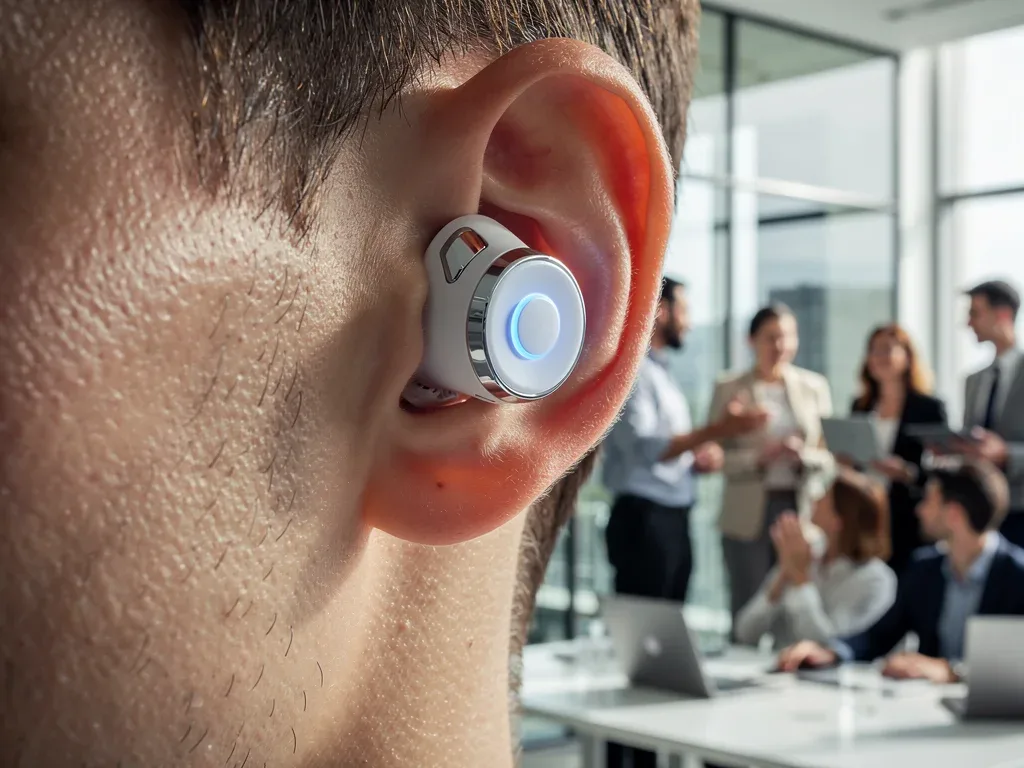
The integration of these technologies into compact, wearable devices like earbuds is a testament to miniaturization and processing power advancements. This combination allows for a truly mobile and unobtrusive translation experience, moving beyond bulky handheld devices or reliance on smartphone apps. The result is a personal interpreter that fits discreetly into your ear, ready to bridge any language gap instantly.
The impact of this technological convergence is far-reaching, promising to dismantle communication barriers that have historically hindered global collaboration. As these devices become more commonplace and refined, their influence on how businesses operate, how individuals travel, and how cultures interact will only grow, paving the way for a more interconnected world.
Reshaping global digital workflow one: seamless virtual collaboration
In today's interconnected business landscape, virtual collaboration is the norm. Teams are often distributed across continents, speaking a multitude of languages. This diversity, while enriching, has traditionally presented significant communication hurdles. Conference calls, webinars, and virtual meetings often require interpreters, adding layers of complexity, cost, and time. Sub-second translation earbuds are dramatically changing this dynamic by enabling truly seamless virtual collaboration, making language barriers virtually disappear.
Imagine a global team meeting where a participant in Tokyo speaks Japanese, a colleague in Berlin responds in German, and another in New York contributes in English, all understanding each other in real-time through their earbuds. This eliminates the need for simultaneous interpreters, reducing meeting times and fostering more direct, spontaneous interactions. The efficiency gains are substantial, allowing teams to focus on problem-solving and innovation rather than navigating linguistic obstacles.
Enhancing meeting efficiency and productivity
- Instantaneous Understanding: Participants receive translated audio almost immediately, allowing for natural, uninterrupted conversation flow.
- Reduced Miscommunication: AI-powered translation minimizes errors and misinterpretations that can arise from traditional translation methods or language proficiency differences.
- Cost Savings: Eliminates the need for expensive human interpreters for routine virtual meetings, freeing up budget for other critical areas.
- Increased Participation: Encourages team members from diverse linguistic backgrounds to actively participate, knowing their contributions will be understood instantly.
The implications extend beyond just verbal communication. Many of these devices are integrated with platforms that can also translate text in real-time, meaning shared documents, chat messages, and presentations can also be understood instantly. This creates a truly unified digital workspace where information flows freely, regardless of the original language. The result is a more inclusive and productive environment where every voice can be heard and understood, driving innovation and fostering stronger global relationships.
Ultimately, these earbuds are transforming virtual collaboration from a logistical challenge into a fluid, natural process. They empower global teams to work together more effectively, accelerating project timelines and improving decision-making, which is crucial in fast-paced digital environments. This shift is not just about convenience; it's about unlocking the full potential of a globally diverse workforce.
Reshaping global digital workflow two: accelerated international business development
International business development hinges on effective communication, particularly when forging new partnerships, negotiating deals, or engaging with clients in foreign markets. Historically, language differences have been a significant bottleneck, requiring extensive planning for translation services, leading to slower processes and potential missed opportunities. Sub-second translation earbuds are now acting as powerful catalysts, significantly accelerating international business development by removing these linguistic barriers.
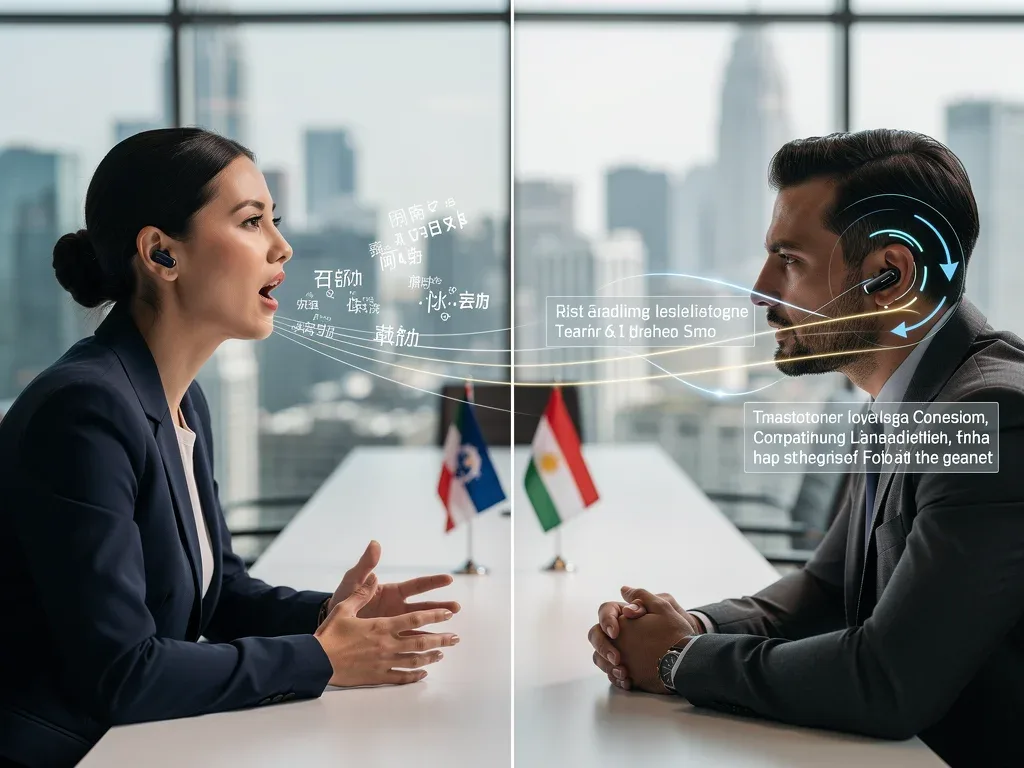
Consider a sales professional meeting a potential client in another country. Instead of relying on a human interpreter or struggling with a language they're not fully proficient in, the earbuds provide instantaneous translation. This allows for direct, personal interaction, building rapport and trust much more effectively. The ability to communicate directly and spontaneously can be the deciding factor in securing a deal or establishing a long-lasting partnership.
Breaking down barriers in key business interactions
- Faster Negotiations: Real-time translation shortens negotiation cycles by enabling immediate understanding and response.
- Enhanced Client Relationships: Direct communication fosters deeper trust and understanding with international clients and partners.
- Expanded Market Access: Businesses can more easily explore and enter new markets without the immediate need for extensive language training for their staff.
- Improved Cultural Sensitivity: While not a replacement for cultural understanding, clear communication helps in navigating cultural nuances more effectively.
The impact is also felt in market research and intelligence gathering. Imagine being able to attend local industry conferences or conduct on-the-ground interviews in a foreign country, understanding every word spoken. This direct access to information and insights can provide a competitive edge, allowing businesses to adapt their strategies more rapidly and effectively to local conditions. The speed at which information can be processed and acted upon is critical in today's global economy.
Furthermore, these earbuds democratize international engagement. Smaller businesses and startups, which might previously have been deterred by the cost and complexity of professional translation services, can now more readily engage in global commerce. This levels the playing field, allowing innovative companies of all sizes to participate in the global marketplace, fostering greater economic integration and opportunity worldwide.
Reshaping global digital workflow three: empowering cross-cultural training and education
The demand for cross-cultural training and education has never been higher, driven by globalized workforces and the need for continuous skill development. Delivering effective training across different languages, however, presents significant challenges. Translation earbuds are proving to be invaluable tools in overcoming these obstacles, empowering more inclusive and efficient learning experiences for diverse audiences.
Consider a multinational corporation rolling out a new software system or safety protocol. Traditionally, this would require developing training materials in multiple languages, hiring trainers fluent in those languages, or using simultaneous interpreters. Each option adds significant time, cost, and complexity. With sub-second translation earbuds, a single training session can be delivered in one language, with participants receiving real-time audio translation directly into their ears.
Transforming learning and development globally
- Universal Access to Content: Training materials, lectures, and workshops become accessible to a global audience regardless of their native language.
- Reduced Training Costs: Eliminates the need for multiple language versions of training, reducing content creation and instructor expenses.
- Enhanced Engagement: Learners can fully participate in discussions and Q&A sessions, fostering a more interactive and effective learning environment.
- Faster Skill Adoption: Rapid dissemination of critical information and skills across diverse linguistic groups accelerates workforce development.
This technology is not just beneficial for corporate training; it has immense potential in academic settings as well. International students can attend lectures and seminars in a foreign country, understanding the content in their native tongue, thereby facilitating faster integration and academic success. Likewise, educators can reach a broader, more diverse student body, breaking down geographical and linguistic barriers to knowledge.
The ability to instantly translate spoken content also supports on-the-job training and mentorship programs in global contexts. An expert can guide a trainee in a different country through a complex task, with their instructions being understood in real-time. This hands-on, immediate feedback mechanism is crucial for skill transfer and professional development, particularly in highly specialized fields where nuances matter.
In essence, translation earbuds are democratizing access to knowledge and expertise, fostering a more educated and skilled global workforce. They are making cross-cultural training and education more scalable, cost-effective, and ultimately, more impactful, which is vital for continuous growth and innovation in the digital age.
The technological underpinnings: how sub-second translation works
Achieving sub-second translation is a remarkable feat of engineering and artificial intelligence. It's not merely about translating words; it's about capturing speech, processing it, translating it, and delivering it back to the user's ear with imperceptible delay. This intricate dance involves several cutting-edge technologies working in harmony, pushing the boundaries of what's possible in real-time linguistic processing.
At the core is a sophisticated pipeline that begins with high-fidelity audio capture. The earbuds' microphones are designed to isolate the speaker's voice, minimizing background noise and ensuring clarity. This clean audio signal is then fed into an advanced Automatic Speech Recognition (ASR) engine. These ASR systems, often powered by deep neural networks, are trained on massive datasets of spoken language, allowing them to accurately transcribe speech into text, even with varying accents and speaking styles.
Key components of real-time translation
- Acoustic Modeling: Converts raw audio signals into phonetic representations.
- Language Modeling: Predicts the most likely sequence of words based on the phonetic input and grammatical rules.
- Neural Machine Translation (NMT) Engines: These are the workhorses of modern translation, taking the transcribed text and converting it into the target language, considering sentence structure and context.
- Optimized Data Transmission: Efficient algorithms and high-speed wireless protocols (like Bluetooth 5.0 or newer) ensure minimal latency in sending data between the earbuds and the processing unit (often a smartphone or directly on-device AI).
- Text-to-Speech (TTS) Synthesis: The translated text is then converted back into natural-sounding speech, often with options for different voices and accents.
The 'sub-second' aspect comes from the optimization of each step in this pipeline. Edge computing, where some AI processing happens directly on the earbud's chip, significantly reduces the need to send all data to the cloud, thus cutting down latency. Cloud-based AI, when used, relies on highly optimized servers and robust internet connections to perform complex linguistic analysis rapidly. Continuous learning and updates for these AI models also play a crucial role, ensuring that the translation accuracy improves over time as they encounter more diverse linguistic data.
The development of specialized low-power, high-performance chips designed for AI tasks within compact form factors has been instrumental. These chips enable complex computations to occur locally, minimizing power consumption while maximizing processing speed. This intricate interplay of hardware and software is what makes the magic of instantaneous, accurate translation possible, blurring the lines between human and machine communication.
Challenges and the road ahead for linguistic AI earbuds
While sub-second translation earbuds represent a monumental achievement, the technology is still evolving, and several challenges remain on the road to perfect, ubiquitous linguistic AI. Addressing these issues will be crucial for the continued adoption and refinement of these transformative devices, ensuring they live up to their full potential in diverse real-world scenarios.
One primary challenge is accuracy, especially in highly nuanced or specialized contexts. While general conversation translation has improved dramatically, fields like medicine, law, or highly technical engineering often use jargon and specific terminology that can still trip up even the most advanced AI. Ensuring context-aware translation that captures the precise meaning, rather than just a literal word-for-word conversion, is an ongoing area of research and development.
Overcoming current limitations
- Contextual Nuance: Improving AI's ability to understand idioms, sarcasm, and cultural references that don't translate directly.
- Acoustic Environment: Enhancing performance in noisy environments, with multiple speakers, or in situations with poor audio quality.
- Privacy and Security: Addressing concerns about data privacy, especially when sensitive conversations are being processed by cloud-based AI.
- Battery Life: Extending the operational time of earbuds, as real-time AI processing can be energy-intensive.
- Rare Languages and Dialects: Expanding support for a wider array of less common languages and regional dialects, which often lack extensive training data.
Another significant hurdle is the naturalness of the translated speech. While Text-to-Speech (TTS) has become very good, it can still sound somewhat robotic or lack the emotional depth of human speech. Future advancements aim to integrate more sophisticated voice synthesis that can mimic the original speaker's emotional tone and even their unique vocal characteristics, making the translated output sound more natural and less disruptive to conversation flow.
Furthermore, the ethical implications of real-time translation are becoming increasingly important. Questions around data privacy, surveillance, and the potential for misuse of such powerful linguistic tools need careful consideration. Developers and policymakers will need to work together to establish robust frameworks that protect users while fostering innovation.
Despite these challenges, the trajectory for linguistic AI earbuds is overwhelmingly positive. Continuous research in machine learning, coupled with advancements in hardware and edge computing, promises to overcome many of these limitations. The future will likely see more personalized, context-aware, and seamlessly integrated translation experiences, further blurring the lines between languages and bringing the world closer together.
The future landscape: what's next for real-time translation
The journey of sub-second translation earbuds is far from over; in fact, we are likely just at the beginning of their transformative impact. The future landscape promises even more sophisticated capabilities, deeper integration into our daily lives, and a broader reach that will continue to redefine global communication and interaction. The advancements we've seen so far are merely a preview of what's to come, driven by relentless innovation in AI and wearable technology.
One major area of future development will be the integration of multimodal AI. This means translation systems won't just process audio; they will also analyze visual cues, body language, and even environmental context to provide more accurate and culturally sensitive translations. Imagine an earbud that not only translates words but also alerts you to a potential cultural misunderstanding based on the speaker's facial expression or gesture. This holistic approach will make cross-cultural communication truly intuitive.
Anticipated advancements and integrations
- Multimodal Translation: Integrating visual and contextual cues for richer, more accurate translations.
- Personalized AI Models: Earbuds learning individual speech patterns, vocabulary, and preferences for highly customized translation.
- Seamless XR Integration: Combining real-time translation with augmented reality (AR) or virtual reality (VR) for immersive cross-cultural experiences.
- Proactive Communication Assistance: AI offering suggestions for phrasing or cultural etiquette in real-time, beyond just translation.
- Energy Efficiency and Miniaturization: Longer battery life and even smaller, more discreet designs for enhanced comfort and usability.
The concept of a truly personalized translation experience will also gain traction. Future earbuds might learn your specific vocabulary, preferred speaking style, and even your voice, making the translated output sound indistinguishable from your own speech. This level of personalization will make interactions feel even more natural and less like a mediated conversation, fostering deeper connections between individuals from different linguistic backgrounds.
Furthermore, we can expect these devices to become seamlessly integrated into a broader ecosystem of smart devices and digital environments. They might connect with smart glasses to provide translated subtitles in real-time for live events, or integrate with smart home systems to translate incoming calls from international contacts. The boundaries between different technologies will blur, creating an omnipresent linguistic assistant that supports us in every aspect of our globalized lives.
The future of real-time translation is one where language barriers become a relic of the past, enabling a truly interconnected and understanding global society. As AI continues to advance at an exponential rate, the capabilities of these earbuds will only grow, promising a world where communication flows freely and effortlessly, fostering unprecedented levels of collaboration, empathy, and shared progress.
| Key Aspect | Impact on Digital Workflows |
|---|---|
| Virtual Collaboration | Enables direct, real-time communication in multinational virtual meetings, boosting efficiency and participation. |
| International Business | Accelerates negotiations and client relationship building by removing language barriers in global markets. |
| Cross-Cultural Training | Provides universal access to learning content, reducing costs and enhancing engagement for diverse workforces. |
| Technological Foundation | Leverages advanced NLP, ASR, NMT, and Edge AI for sub-second, context-aware translations. |
Frequently asked questions about translation earbuds
How accurate are sub-second translation earbuds currently?▼Modern translation earbuds offer high accuracy for general conversations, thanks to advanced AI like neural machine translation. However, accuracy can vary with complex jargon, strong accents, or noisy environments. Continuous AI improvements are steadily enhancing their performance.
Can these earbuds translate multiple languages simultaneously?▼Yes, many sub-second translation earbuds are designed to handle multiple languages, allowing participants in a conversation to speak and receive translations in their preferred languages in real-time. The number of supported languages varies by device and platform.
What are the main benefits for businesses adopting this technology?▼Businesses benefit from improved global collaboration, accelerated international business development, and more efficient cross-cultural training. These earbuds reduce communication friction, save on interpretation costs, and foster a more inclusive global workforce.
Are there any privacy concerns with using real-time translation earbuds?▼Privacy is a valid concern, as conversations are often processed by cloud-based AI. Reputable manufacturers prioritize data security and anonymization. Users should always be aware of the terms of service and privacy policies associated with their chosen device and platform.
How do these earbuds differ from smartphone translation apps?▼Translation earbuds offer a more discreet, hands-free, and natural communication experience compared to smartphone apps. They provide real-time, sub-second audio translation directly into the ear, facilitating seamless conversational flow without needing to pass a device back and forth.
Conclusion
The emergence of sub-second translation earbuds marks a pivotal moment in human communication and global digital workflows. By effectively dismantling language barriers in real-time, these devices are not merely gadgets but powerful enablers of unprecedented collaboration, accelerated international business, and democratized access to knowledge. As linguistic AI continues its rapid evolution, we can anticipate an even more interconnected world, where seamless cross-cultural interaction becomes the norm, fostering innovation and understanding on a truly global scale. The future of communication is here, and it fits right into our ears.
